動物損壊・事例ファイル
Case File 06 スコットランド・Orkney Islands
リチャード・ボネンファントによるリポート
デビッド・ケイトン、APFUとコークスクリュー・アザラシ損壊事件
PDFダウンロード(英語版のみ)

図1:典型的な螺旋状の傷を示す、「コルクスクリュー」損壊されたアザラシの死体。2009年7月、スコットランドのセント・アンドリュース湾のエデン河口で採集された。出典:海洋管理機構(MMO)
Figure 1: A typical corkscrew mutilated seal corpse showing a classic spiral wound. Collected in the Eden estuary in St. Andrews Bay, Scotland in July 2009. – Credit: Marine Management Organization (MMO)

図2:らせん状の傷のクローズアップ。アザラシの表皮をきれいに切り裂き、体の内側の筋膜を貫通する手前で終わっているのが見える。出典:海洋管理機構(MMO)
Figure 2. Close-up of a segment of the spiral wound above showing a clean cut through the seals blubber ending before penetrating the body’s inner fascia. – Credit: Marine Management Organization (MMO)
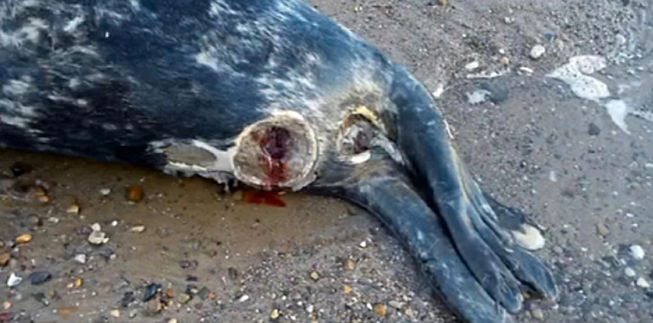
図3:上と同じアザラシで、内臓を取り出すための3つの円形穴がある。出典:デイビッド・ケイトン
Figure 3: Same seal as shown above with 3 circular portals through which internal organs were removed. – Credit: David Cayton

図4:頭部は頸椎まで肉が剥ぎ取られている。出典:デビッド・ケイトン
Figure 4: Head stripped of all flesh to the cervical vertebrae. – Credit: David Cayton

図5:頸椎で切断されたアザラシの首。切り口付近の皮膚が縮んでいるところに注目。出典:デイビッド・シチュアート
Figure 5: Decapitated seal severed at the cervical vertebrae. Note the near cut where the other skin has shrunk away. – Credit David Stuart
日本語翻訳
元英語は下で、元インターネットリンクはこちら。
記事の出店: Daily Mail 2010年、8月18日、badaliens.info
デイヴィッド・ケイトンは、イギリスにおける動物切断事件の最も著名な研究者の一人と言えるでしょう。彼は数人の仲間たちとともにAnimal Pathology Field Unit (APFU)・動物病理現地調査班・を2001年に設立し、奇妙な外科手術のような傷を負って死亡していた羊や牛の調査を行ってきました。
APFUはこれまで主に家畜や野生動物の切断事件を調査してきましたが、近年では海洋哺乳類の切断事件、特にアザラシに関する調査も開始しています。
デイヴィッド・ケイトンが初めてアザラシの切断事件について聞いたのは、UFO研究者のトニー・ドッドを通じてでした。1990年代初頭、スコットランドのRSPCA(英国王立動物虐待防止協会)の検査官がトニー・ドッドに、オークニー諸島で30頭の首を切断された血のないハイイロアザラシが発見されたと伝えました。これらのアザラシの頭部は一つも見つかっていません。
2009年末、デイヴィッド・ケイトンはノーフォーク沿岸で50頭以上の切断されたアザラシが発見されたという情報を受け取りました。ほとんどが妊娠中のメスでした。奇妙な螺旋状の切り傷が、左下あごから始まり体をぐるりと一周していました。
この切り傷は、皮膚と脂肪、そして筋肉の一部を切り取る程度の深さでした。スコットランドでも同様の事例が確認されています。2010年6月には、テイ湾で7頭のアザラシが死んでいるのが見つかり、そのすべてがわずか150頭ほどの繁殖集団に属していました。
さらに、セント・アンドリュース湾とフォース湾でも18頭の死亡例が報告されています。
セント・アンドリュース大学の海洋哺乳類研究ユニット(SMRU)の上級研究員キャラン・ダック氏は、「この現象の原因は全く分かっていません」と語っています。
「我々は、非常に珍しい裂傷を体全体に螺旋状に負った状態で、死んだアザラシが海岸に打ち上げられているのを発見しています。頭部から腹部にかけて、体を一回から二回転するような切り傷です。連続した切れ目で、切断面は非常に滑らかです。」
これらの傷は、漁網や船のスクリューによってできるような、既知の原因とは一致していません。ただし研究者たちは、単一の回転刃によって機械的に生じた可能性があると考えています。
この奇妙な「コルク抜き型」の死亡例は、当時イギリスの全国紙でも報道されました。
Source: Daily Mail 2010, August 18th, badaliens.info
David Cayton is arguably the most prominent researcher on animal mutilations in the United Kingdom. He and several associates formed the Animal Pathology Field Unit (APFU), set up in 2001 to investigate sheep and cattle that were discovered dead with strange, surgical-style injuries.
While traditionally having investigated domestic and wild animal mutilations, the APFU has begun investigating sea mammal mutilations as well. In particular, seal mutilations. David Cayton first heard about mutilated seals via UFO researcher Tony Dodd. A Scottish RSPCA inspector informed Tony Dodd in the early 1990s that in the Orkney Islands, 30 decapitated bloodless Grey seals were found, none of their heads was ever discovered.
In late 2009 David Cayton was informed of more than 50 mutilated seals found off the Norfolk coast, mainly pregnant females. Strange spiral cuts starting at the left lower jaw and spiraling round the body. These cuts were just deep enough to take outer skin and blubber and a piece of muscle. Others were discovered in Scotland. In the Firth of Tay, seven were found dead in June 2010, all from a breeding population of only 150. Eighteen further deaths have been reported in St Andrews Bay and the Firth of Forth.
Callan Duck, a senior research scientist at the Sea Mammal Research Unit (SMRU) at St Andrew’s University, said: ‘We simply don’t know what is causing this.” “We are finding seals coming ashore dead with these highly unusual lacerations right around their body like a spiral. From their head down they can have one or two complete revolutions to their abdomen. It is a continuous cut with a very smooth edge.” The injuries are not consistent with any known phenomenon, such as those caused by fishing nets or boat propellers, although researchers believe they are mechanically produced by a rotating single blade.
These bizarre corkscrew style deaths made it into the national newspapers at the time.